
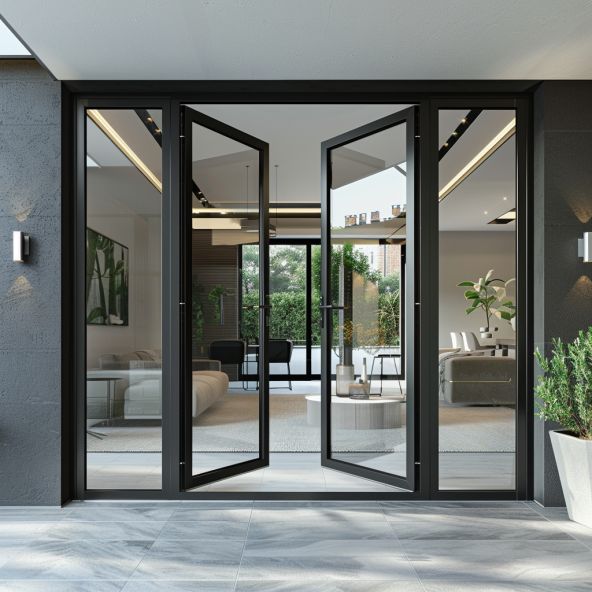
Walking into a building should feel seamless, not like you’re wrestling with a stubborn door. That’s exactly what the latest automatic door systems are delivering in 2026.
The technology has evolved from simple motion sensors to intelligent, AI-powered solutions that anticipate your needs, keep you safe, and slash energy bills.
Key Takeaways
- AI and IoT make automatic door systems predictive and adaptive to real-time traffic
- Touchless doors and biometric access systems are standard
- Next-generation sensors improve safety with pinpoint accuracy
- Smart doors cut energy costs by building automation systems
The AI and IoT Revolution
How are AI and IoT transforming the future of automatic doors? They’re turning basic entry points into intelligent systems that learn and adapt. Modern automatic door operators analyze foot traffic, adjust opening speeds based on crowds, and predict maintenance needs before breakdowns.
Your automatic door solutions communicate with HVAC systems, security cameras, and access control panels. When an auto door detects low traffic, it signals climate control to reduce energy use. During peak hours, systems optimize cycles to maintain comfort while handling crowds.
IoT connectivity lets you monitor every door operator from one dashboard. You get instant alerts, usage stats, and maintenance scheduling based on actual wear.
Smart Features That Matter
What clever things must businesses find in new auto door systems? Target adaptive speed, multi-sensor integration, and smooth connectivity.
- Adaptive Speed and Assessment: The most improved auto door systems have adaptive speed control, which detects the approaching individuals and the speed of the individual, and automatically determines whether the user requires any special accessibility.
- Sophisticated Sensing Technology: In the latest models, 3D cameras are used to differentiate a wheelchair user, someone with boxes, or a running kid, which has greatly minimized the number of accidents that the old sensor on the door can still cause.
- Smart residential integration: Smart residential doors are integrated with voice assistants, home security, and even the local weather.
- Dynamic Energy Efficiency: Energetically efficient doors are now synchronized with the building automation systems to prevent as much heat loss as possible by remaining open more when out in harsh weather conditions, besides only opening as wide as is required by the traffic passing through.
Touchless Technology: The New Standard
Are touchless automatic doors becoming the industry standard in 2026? Absolutely. The demand exploded during health crises, but convenience and hygiene have made them permanent.
Wave-to-open sensors, proximity detection, and facial recognition eliminate physical contact. Your commercial automatic doors identify authorized personnel through biometric access systems without badges or codes.
For healthcare, food service, and hospitality, touchless operation is expected. Auto doors Australia suppliers report that the majority of installations include touchless activation as standard in specific industries.
Current systems distinguish between someone approaching and just walking past, reducing unnecessary cycles that waste energy.
Next-Generation Sensors and Safety
How do next-gen sensors improve the safety and reliability of doors? Modern sensors create invisible safety zones protecting users from all angles. Today’s intelligent door solutions monitor the entire door area, approach path, and space behind the door.
Advanced automatic door sensors use radar, infrared, pressure mats, and optical systems simultaneously. If someone stumbles near a closing door, the system reverses instantly. If a child runs into the sensor zone, the door responds to their size and speed.
Modern auto door operators include predictive analytics that flag maintenance needs before issues become safety hazards.
Industry Applications
What industries will benefit most from advanced auto door technology? Healthcare facilities gain from automated access control that limits germ transmission. Retail uses smart doors to analyze customer flow.
Manufacturing plants need automatic door systems that integrate with security protocols. Educational institutions use intelligent door solutions that can instantly switch to emergency lockdown modes.
Energy Efficiency and Cost Savings
How do smart door systems help reduce energy costs? By minimizing open time and optimizing based on conditions. Traditional auto doors stay open for fixed durations. Smart systems adjust on the fly, keeping doors closed longer in extreme weather.
Integration with building automation systems lets your doors participate in energy management. Analytics identify inefficiencies if an entrance gets minimal use during certain hours, you can adjust access patterns to save energy.
Making the Upgrade Decision
Is it worth upgrading from traditional to smart automatic doors in 2026?
- The Seven-Year Benchmark: If your current system is over seven years old, upgrading is almost certainly the right move to avoid obsolescence and rising failure rates.
- Tangible ROI: Return on Investment is realized quickly through significantly reduced maintenance costs, lower energy bills, and a smoother user experience.
- Calculated Payback Period: When you factor in the reduction of emergency service calls and energy waste, many businesses find that upgraded automatic door systems pay for themselves within just three to four years.
- Risk & Liability Reduction: Modern safety features drastically decrease door-related injuries, protecting you from insurance claims, while enhanced security measures guard against unauthorized access far better than legacy systems.
Biometrics and Building Access
What role will biometrics play in the future of building entry systems? Biometric access systems now include facial recognition, iris scanning, and gait analysis. These integrate with automatic door operators, creating frictionless entry where authorized individuals simply walk up and doors open.
Privacy concerns are addressed through edge computing that processes biometric data locally. Multi-factor systems combine facial recognition with behavioral patterns, ensuring sophisticated spoofing attempts fail. Your commercial automatic doors become the first defense in comprehensive security.
Conclusion
In 2026, the technology of automatic doors will be miles further than it was a few years ago. Smart functionality is coming across the board in terms of price. It is now about the role of AI, contactless operation, and energy efficiency.
Smart automatic doors on buildings provide more information, reduce the expenses of operation, and improve security for all.
Frequently Asked Questions
1. How do next-gen sensors improve the safety and reliability of automatic doors?
They also have several detection technologies running at the same time to detect from every angle. This establishes extensive safety areas that identify the obstacles and traffic that older systems do not understand.
2. What industries will benefit most from advanced automatic door technology?
The most beneficiaries are healthcare, retail, education, and manufacturing. These industries require cleanliness, safety, traffic control, and efficiency in the use of energy, which is provided by smart doors.
3. How do smart automatic doors help reduce energy costs?
They reduce open time, change with the weather, and are also integrated with building management systems. Facilities are reporting energy loss in HVAC as 20-30%.
4. Is it worth upgrading from traditional to smart automatic doors in 2026?
Yes, when you have a system more than seven years old. ROI is realized in the form of reduced maintenance, less energy expenditures, enhanced security, and less liability.
5. What role will biometrics play in the future of building entry systems?
Biometrics means that one can now have access with zero touch, no cards or codes. The new norm will be the use of facial recognition, which unlocks doors to authorized persons with a simple press of a button.