
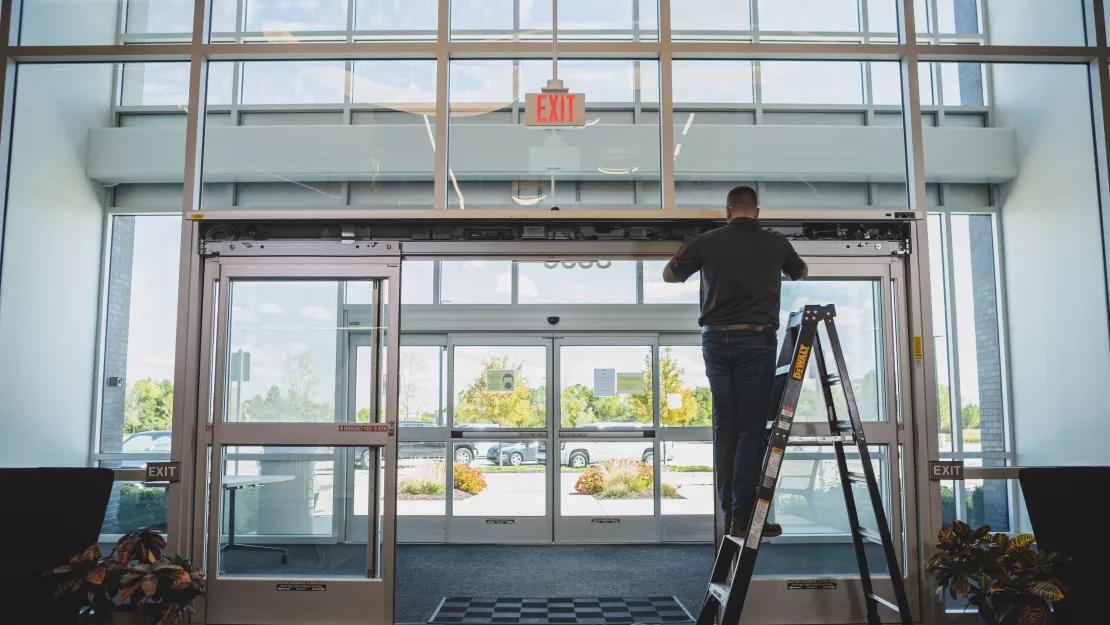
Your customers walk up to your entrance. The door does not open. This moment makes your business look broken to the outside world. An automatic door not working is more than an inconvenience. It is a safety risk and a compliance problem waiting to escalate.
Most building managers ignore early warning signs until a complete failure forces an emergency call. This automatic swing door troubleshooting guide covers five red flags that demand action now, before someone gets hurt or your building fails inspection.
Key Takeaways:
- Slow operation usually means the door motor or drive arms are wearing out.
- Strange sounds from the swing door operator signal mechanical failure ahead.
- Sensor failure creates dangerous gaps where the door may close on people.
- Ignoring these signs can violate Australian automatic door standards.
1. Door Moving Slowly
The first sign is subtle. Your door takes a full second longer to open than before. This slow operation is easy to dismiss. But it tells you something inside the system is struggling.
The most common culprits are a weakening door motor or worn drive arms. Both components lose efficiency over time. When you notice hesitation, schedule preventive automatic door maintenance right away.
2. Door Stopping Halfway
A door stopping halfway through its cycle is a serious red flag. The door starts to open, then freezes. Or it begins to close and stalls at a 45-degree angle. This jerky movement points to a problem in the control unit or the hinges.
What Causes the Door to Stall
Dirt buildup on the track and misaligned hinges are the top reasons. The control unit may also receive conflicting signals from damaged wiring. Either way, the door not closing properly creates a security gap and a trip hazard for everyone walking through your entrance.
3. Unusual Grinding Noise
Strange sounds coming from above the door frame should never feel normal. An unusual grinding noise means metal parts are rubbing where they should not. This is your swing door operator telling you something is about to break.
Which Components Make Noise
- Drive arms: Worn bushings cause a rhythmic clicking sound during each cycle.
- Hinges: Dry or corroded hinges produce a high-pitched squeal at full extension.
- Door motor: A failing motor emits a low hum that grows louder over weeks.
If you hear any of these, book an automatic door service before the operator seizes completely.
4. Sensor Failure and Random Opening
This is the most dangerous warning sign. Sensor failure means the door cannot tell the difference between a person and empty space. The door not opening when someone approaches is frustrating.
But the door closing on a wheelchair user because the safety beams stopped working is a liability nightmare.
Activation Sensors vs. Safety Beams
- Activation sensors trigger the door to open. When they fail, people stand outside waiting.
- Safety beams stop the door from closing on people. Failure creates a crushing hazard.
- Random opening occurs when sensors detect rain, reflections, or insects as false triggers.
Proper automatic door troubleshooting starts with testing both sensor types separately.
5. Unexpected Shutdown During Business Hours
Your door works fine at 9 AM. By 2 PM, it is dead. This unexpected shutdown often traces back to a failing backup battery or an overheating control unit. The system protects itself by shutting down, but your entrance is now a manual door that few can operate.
Automatic door servicing should include battery load testing at every visit. A weak backup battery passes a visual check but fails under real demand. Catching this early prevents Safety concerns from turning into real incidents.
Compliance and Safety Risks You Cannot Ignore
Automatic door injuries are reported annually in commercial buildings across Australia and similar markets, according to industry safety data. Most involve doors that missed scheduled door inspections.
| Warning Sign | Likely Cause | Risk Level |
| Slow operation | Motor or drive arm wear | Medium |
| Door stalls midway | Hinges or control unit | High |
| Grinding noise | Mechanical friction | High |
| Sensor failure | Damaged beams or wiring | Critical |
| Random shutdown | Backup battery or overheating | High |
Ignoring these signs puts you in violation of workplace safety requirements and commercial building compliance codes. Commercial door maintenance is not optional. It is a legal obligation under Australian automatic door standards.
Any compliance concerns should be addressed with a qualified technician immediately.
An Honest Take On When Maintenance Is Not Enough
I want to be straight with you. Not every automatic door can be saved. If your swing door operator is over 15 years old, replacement parts may not exist. Patching an aging system gives false security.
The door may pass today but fail next month. Automatic entrance maintenance extends life but cannot reverse decades of wear. If your technician recommends replacement, listen.
Repeated automatic door maintenance on a dying system wastes money and puts visitors at real risk. Safety concerns should always outweigh short-term savings.
Conclusion
Your automatic swing door is the first thing every visitor experiences. A reliable door builds real trust. Keeping it safe protects your reputation, your customers, and your legal standing. The five warning signs above are your early detection system.
Take these three steps this week. First, walk through your entrance and time the door cycle. Second, listen for any unusual sounds during peak hours. Third, book a professional inspection if you notice even one red flag.
Do not wait for a complete failure. Visit Auto Ingress to let proper maintenance keep your doors safe and compliant year-round.
FAQs
1. How often should automatic doors be serviced?
Service commercial automatic doors every six months. High-traffic entrances need maintenance every three months. Regular checkups prevent sudden breakdowns and keep your building legally compliant.
2. Can I fix an automatic door myself?
No, do not repair an automatic door yourself. Doors contain high-tension springs and dangerous electrical parts. DIY fixes void your warranty and break safety laws. Always call a licensed technician.
3. Why does my automatic door open by itself at night?
Sensors are detecting false movement. Flying insects, heavy rain, headlights, or wind trigger the activation beams. A technician must adjust the sensor range so it only detects real people.
4. How long do automatic door operators last?
Automatic door operators last 10 to 15 years with routine maintenance. Very busy doors wear out faster. Replacing worn parts early keeps the motor running reliably for its full lifespan.
5. What happens if my automatic door fails a safety inspection?
You get an official notice with a strict repair deadline. You also become legally liable for customer injuries. A certified technician must fix the issue immediately.