
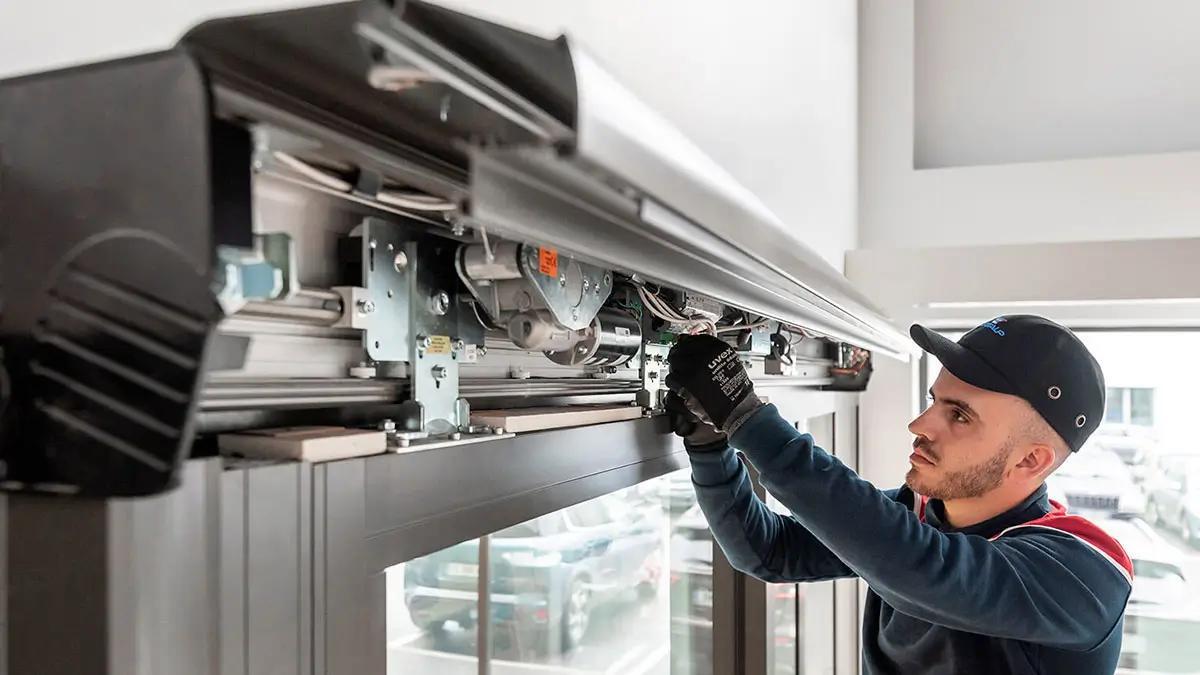
Your main commercial entrance moves thousands of people every week. When the entrance begins to drag, hesitate, or hum loudly, daily business slows down. An overworked door is not just annoying.
It traps conditioned air, annoys your visitors, and can fail at the worst possible moment. Many building managers mistake motor strain for simple track dirt. They order quick fixes while the drive unit burns out behind the scenes.
Upgrading to a heavy-duty system solves chronic entrance breakdowns. You can explore proven commercial systems by checking reliable sliding door options built for heavy use.
Key Takeaways:
- Sluggish door movement usually signals that the drive unit cannot handle door weight or daily traffic.
- Hot motor housings and loud mechanical grinding mean drive components are nearing total failure.
- Patching an undersized motor repeatedly leads to constant business interruptions.
- Upgrading to a high-capacity drive unit delivers better uptime and smooth door travel.
Standard Motors Struggle in Busy Buildings
Standard automatic door operators used in commercial facilities are designed for average foot traffic. When building occupancy grows, these units run constantly without adequate rest.
The main unit must overcome both the physical weight of heavy glass and external wind resistance. When traffic spikes, standard units suffer from a slow opening speed that creates bottlenecks in your entryway.
Motor Strain vs. Mechanical Drag
Heavy traffic places extreme stress on internal drive gears during daily acceleration and braking.
- Door hesitation occurs when the drive unit cannot generate enough initial torque.
- Vibration travels through the header box as the drive unit fights physical resistance.
- Frequent stopping happens when internal safety limits trip due to physical drag.
3 Clear Warning Signs Your Automatic Door Motor Is Failing
An undersized or dying unit rarely fails without warning. Look for these physical, audible, and electronic red flags before an emergency shutdown occurs.
1. Audible and Thermal Symptoms
A healthy commercial entrance operates quietly. When a drive assembly is overloaded:
- Metallic grinding or scraping indicates stripped gears inside the transmission box.
- Hot motor housings cause internal thermal overload switches to trip, shutting the entrance down until the unit cools.
- Drive belt slipping occurs when excessive heat softens rubber drive belts, causing erratic travel speeds.
2. Track Friction and Component Wear
Motor failure does not happen in isolation. A weakening motor accelerates wear across the entire entrance assembly:
- Flat-spotted rollers add heavy resistance along the overhead track, forcing the motor to draw higher amperage on every cycle.
- Stretched drive belts lose tooth engagement, causing jerky starts and stops.
3. Electronic and Sensor Communication Errors
Modern commercial doors rely on digital communication between optical sensors, safety beams, and the electronic controller. When mechanical performance degrades:
- Safety sensors hold doors open because panel travel times exceed the controller’s pre-programmed safety thresholds.
- Controllers display recurring error codes due to excessive electrical current draw from the straining motor.
- Ghost cycles or erratic reversals occur when drive hesitation mimics an obstruction signal.
Sensor and Controller Communication Issues
Modern commercial doors rely on digital communication between input devices and the motor. When the drive unit struggles, system logic breaks down.
This mechanical strain creates inconsistent operation throughout the day. The door may open halfway, pause, or reverse direction without any clear obstacle in the doorway.
Sensor Misalignment Signs
Electronic controls react immediately when drive travel times do not match programmed settings.
- Safety sensors hold the door open because the drive unit moves too slowly through its cycle.
- Activation sensors trigger opening cycles that the overworked motor cannot complete in time.
- The system controller shows error codes because the motor draws too much electrical current.
Why Minor Fixes Cannot Solve Undersized Motors
Facility managers often schedule basic commercial automatic door repair to address symptoms rather than the root cause. Technicians replace belts or adjust sensor settings, but the door fails again within weeks.
According to commercial facility studies, entrance doors operating above 80 percent of rated motor capacity suffer three times more unplanned breakdowns within two years.
| Feature | Standard Commercial Operator | Heavy-Duty Upgraded Operator |
| Daily Traffic Capacity | Up to 500 cycles | Over 2,000 cycles |
| Panel Weight Support | Light to medium frames | Heavy double-glazed/solid frames |
| Thermal Resistance | Basic duty cycle cut-off | Continuous run thermal rating |
| Wind Load Handling | Low resistance | High wind pressure compensation |
| Service Lifespan | 3 to 5 years under heavy use | 8 to 12 years under heavy use |
Continuing to patch an undersized unit increases maintenance calls that disrupt your building operations.
Benefits of a Heavy-Duty Upgrade
Replacing a weak drive unit with a robust automatic door operator changes how your entrance performs. Modern high-capacity systems handle extreme foot traffic without breaking down.
A high-output door motor provides the torque needed for fast, smooth opening cycles. Most heavy-duty swing door units allow clean retrofit installation inside existing header profiles, saving time during the changeover.
This upgrade delivers higher cycle capacity and improved reliability during peak hours. Your building gains reduced downtime, superior energy efficiency, improved safety, and long-term reduced maintenance costs.
When an Upgrade Won’t Fix the Problem
A heavy-duty drive motor cannot fix a structurally damaged entrance. If your building foundation has shifted, the overhead door frame may be out of square. When the frame sags, the door panels bind physically inside the tracks.
Installing a larger motor on a twisted frame will only bend your drive arms or shatter glass panels. If your track header is cracked or unlevel, you must rebuild the physical frame before upgrading the drive unit.
Conclusion
A struggling automatic entrance wastes energy and frustrates everyone who visits your facility. Upgrading to a heavy-duty motor ensures reliable, quiet, and safe door operation every day.
First, check your door header for excessive heat or grinding sounds during peak business hours. Second, have an expert check your panel weights against your current operator rating. Third, choose a heavy-duty drive upgrade built for continuous commercial duty cycles.
Explore reliable entrance solutions by checking heavy-duty swing doors for high-traffic buildings. You can view full commercial entrance packages at Auto Ingress today.
Frequently Asked Questions
1. Why is my automatic commercial door moving so slowly?
Your door motor may lack the power needed for the door weight. Worn rollers, tight track guides, or dying motor capacitors also reduce speed. A technician must test motor torque and physical drag.
2. How do I know if my automatic door motor is burnt out?
The door will not move, and the motor housing feels cold or smells like burnt wiring. The controller may show power, but the motor will not turn. A technician must test for electrical continuity.
3. Can you upgrade just the motor on an automatic door?
Yes, technicians can install a retrofit motor kit inside your existing header box. This upgrade adds a stronger motor, gearbox, and controller without requiring you to replace the entire entrance frame or glass panels.
4. What causes an automatic door gearbox to fail?
Excessive door weight, wind resistance, and lack of lubrication strip internal gear teeth over time. Once the gears wear down, the motor spins without moving the door smoothly, causing slipping and loud grinding noises.
5. How does a heavy door motor save energy?
A heavy-duty motor opens and closes panels quickly without stalling. Faster cycles stop conditioned indoor air from escaping your building. This stable indoor climate reduces overall workload on your heating and cooling systems.