
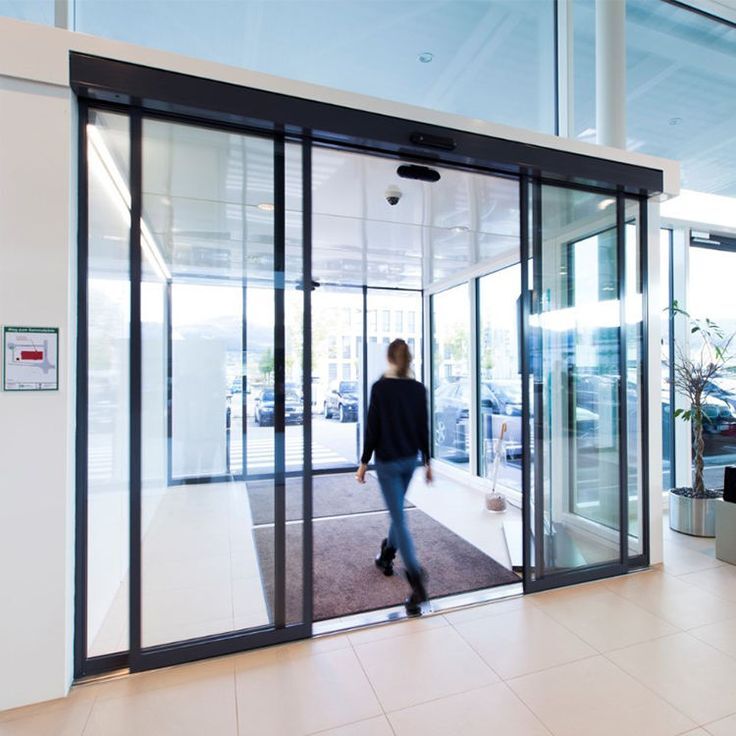
You’ve probably walked through automatic sliding doors a thousand times without thinking about it.
They just work. But here’s what most people don’t realize: those doors aren’t free to keep working.
I’m going to be real with you. When you buy the cheapest automatic sliding doors you can find, you’re setting yourself up to spend way more money down the road.
Most facility managers make the same mistake. They look at the price tag and call it a day.
Let’s discuss it here.
Key Takeaways
- Cheap doors break constantly because plastic gears wear out fast
- Poor seals waste 2,500 – 4,000 annually on heating and cooling
- One motor repair costs more than some entire budget door systems
- Preventive maintenance only works if your door actually lasts
The Real Price Isn’t What You Pay on Day One
When you’re shopping for commercial automatic doors, you get a price quote. You pick the lowest one and stop thinking.
Here’s what we’ve seen: that initial price is only 20% of what you’ll actually spend. The other 80% shows up later in repair bills and wasted energy.
A quality commercial automatic door motor handles about 1 million cycles. A cheap one maxes out around 200,000 to 400,000 cycles.
If your door opens fifty times a day, a cheap motor dies in less than two years. A better motor lasts five to six years.
That initial “savings” starts to look like the worst financial decision you made that year.
Plastic Gears and Why They’re a Problem
Budget door motors use plastic gears. Not metal. Plastic.
A door opening hundreds of times daily stresses those gears constantly. Plastic can’t handle it. The gears wear down and strip. The motor stops working.
We’ve watched this happen to clients. The door won’t open. Now you’ve got a security problem and a fire code violation. You need it fixed today.
What Causes Automatic Door Motors To Die
- Dirt piles up on sensors, and the motor works harder
- The door wasn’t installed level, so everything strains
- Hinges never get oiled, so friction burns everything out
- Door gets used way more than designed for
Once that motor fails, you’re paying $1,200 to $3,500 to replace it.
| Part | Budget Lasts | Quality Lasts | Repair Cost |
| Motor | 18-24 mo | 5-7 yrs | 1,500-3,500 |
| Sensors | 12-18 mo | 4-6 yrs | 400-800 |
| Control Board | 2-3 yrs | 7-10 yrs | 600-1,200 |
| Door Seals | 6-12 mo | 2-3 yrs | 200-400 |
Your Energy Bill Is About to Get Worse
A cheap automatic sliding door will mess with your heating and cooling costs.
Budget doors have thin rubber seals that crack quickly. Once they fail, cold air leaks out in winter and hot air leaks in summer. Your HVAC system works overtime.
Facilities with cheap doors spend an extra 15% to 20% on HVAC every year. For a mid-sized retail store, that’s $2,500 to $4,000 annually in wasted energy.
Over five years, that’s $12,500 to $20,000 in extra costs. That money could have bought a better door system.
With cheap doors, you’re also replacing seals every six to twelve months. With quality doors, every two or three years.
More replacements mean more service calls and more downtime.
Maintenance: Do It Now or Pay for It Later
Skip maintenance, and we’ll see how it ends.
A maintenance visit costs $150 to $300, usually four times a year. That’s $600 to $1,200 annually.
Emergency repairs cost $1,800 or more when something breaks. With cheap doors, you’ll need two or three emergency repairs yearly.
Spend a little regularly, or spend a lot when a crisis hits. Regular maintenance wins.
What proper maintenance looks like:
- Clean sensor windows so they can see movement
- Oil hinges and tracks so nothing sticks
- Check the motor to make sure it’s running right
- Look at seals and see if they’re cracked
- Test the backup power system
Do this consistently, and you’ll catch problems before they blow up.
Sensor Problems Go Beyond Annoyance
Sensors tell your door to open.
When they fail, the door behaves weirdly. Opens slowly. Closes too fast. Won’t open at all. Opens for no reason.
Usually, dirt gets on the sensor lens. Dust, fingerprints, and condensation block the signal.
Cheap sensors aren’t sealed well, so this happens constantly. Better sensors have actual protection from weather.
It’s not just frustrating. A door opening unexpectedly creates liability in case a door that won’t open in an emergency violates the fire code. We’ve seen this lead to legal problems.
It starts as a $400 sensor replacement and can end up costing way more.
One Repair Bill Can Exceed Your Entire Cheap System
Here’s what a single motor repair costs:
- Motor: $800 to $1,800
- Technician time: $500 to $1,500 for two or three hours
- Shipping if urgent: $200 to $400
- Your door being down: lost business, angry customers, security risk
- Total: $1,700 to $4,200 for one repair.
With cheap systems, you’ll need this repair multiple times in five years.
A business with three cheap doors might spend $10,000 to $20,000 on motor repairs over five years. The same business with quality commercial automatic doors might spend $2,000 to $4,000 total.
Believe me, you do not need thousands of dollars wasted.
What Cost-Effective Actually Means
Most people think cost-effective means buying the cheapest thing.
That’s wrong.
Cost-effective means spending the least over the life of the system. Purchase price, installation, maintenance, energy bills, repairs, replacements. Everything combined.
A quality automatic door costs 30% to 40% more upfront. Over seven years, you spend 25% to 35% less with quality.
Quality motors last longer. Quality seals don’t leak energy. Quality sensors don’t need replacing every year.
It’s like cheap shoes versus good shoes. Cheap shoes cost less, but you buy them twice as often. Good shoes cost more, but you only buy one pair.
Conclusion
We see this story all the time.
A business buys the cheapest automatic glass sliding doors, thinking they’re being smart. They save $2,000. Then repairs start. Energy bills climb. Downtime costs customers. By year three, they’re kicking themselves for not spending extra upfront.
The real question isn’t “What’s cheapest?” It’s “What will cost me less than five to seven years?”
Those are completely different questions.
Here’s what you should do:
- Ask every vendor for a full cost breakdown over seven years.
Include maintenance, expected repairs, and energy costs.
- Get the actual maintenance checklist for any system you’re considering.
Know exactly what you’re getting into.
- Tell them how many people use the door daily.
Make sure they’re selling you something rated for your real usage.
Check out our guide on automatic door systems for commercial buildings for more.
FAQs
1. What causes a commercial sliding door motor to fail?
Plastic gears strip from constant use. Hinges go without lubrication, so friction burns everything. Poor installation leaves doors unbalanced. Budget systems fail 3-4 times faster.
2. Are cheap automatic sliding doors more expensive to maintain?
Yes. Budget doors need service every six months. Quality doors need it every two to three years. Emergency repairs cost $1,800+ versus 150-300 for regular maintenance.
3. Is it cheaper to repair or replace a commercial automatic sliding door?
Repair if under five years old and one part is broken. Replace if older than seven years or multiple parts are failing. Problems keep stacking up otherwise.
4. How long do commercial automatic sliding door systems last?
Quality systems run seven to ten years before major work. Budget systems have serious problems around two to three years.
5. What should be included in an automatic sliding door maintenance checklist?
Clean sensor windows and oil moving parts, check the motor with equipment, inspect seals, test emergency backup systems, update control board software.