
This happens more than buyers admit. Most delays don’t start on site. They start at the quote stage, when a supplier skips steps to win the job.
We built Auto Ingress because we kept seeing commercial buyers deal with late parts, poor planning, and failed safety checks.
Getting your automatic sliding door installation right starts with knowing what a proper automatic door supplier checks before measuring your doorway.
Key Takeaways
- Most delays trace back to bad measurements or vague quotes, not shipping.
- A real automatic door supplier gives you proof documents before you sign, not just a price.
- Safety failures usually come from skipped sensor checks, not faulty parts.
- Maintenance costs less over time than reactive repairs and downtime.
When Automatic Sliding Doors Go Wrong Before Anyone Notices
Most problems on a job site were baked in weeks earlier.
Incorrect Measurements Start the Delay Chain
A salesperson measures the opening, not the installer who fits the door. That gap causes most rework on commercial jobs. Frame sizes shift once builders finish the wall, and nobody rechecks. The door panels arrive and don’t fit at all.
An Incomplete Quotation Hides the Real Story
A cheap quote often means something got left out on purpose. Ask what’s excluded before comparing prices.
- Commissioning and testing fees added after installation
- Access-control wiring billed as a separate job
- Breakout hardware quoted as optional, not standard
Who Actually Builds Your Automatic Door Supplier Chain
An automatic sliding door supplier rarely does the whole job alone. Several trades touch your entrance before it opens.
Who Should Be On Your Supplier List
- The manufacturer builds the operator and track; the distributor supplies it locally
- The installer fits the frame; the glazier handles the toughened or laminated glass
- The electrician wires power; the access-control contractor sets up card or key systems
- The builder coordinates the opening; your facility manager and a service technician take over after handover
What a Genuine Automatic Door Supplier Should Hand You Before You Sign
Paper trails protect you after the sale is done.
Documents That Prove They’re Legit
- A product data sheet, shop drawings, and test documentation for the exact model.
- A compliance statement, an installation program, and a commissioning record.
- A maintenance schedule, clear warranty terms, and honest parts availability and service response time.
If a supplier can’t produce these, or won’t share relevant project references, treat it as a warning sign.
Inside the Door: Parts Every Commercial Buyer Should Understand
You don’t need to be an engineer. You do need to know what you’re paying for.
An automatic glass door supplier should explain each part in plain language, not just list model numbers.
What’s Inside the Door Package
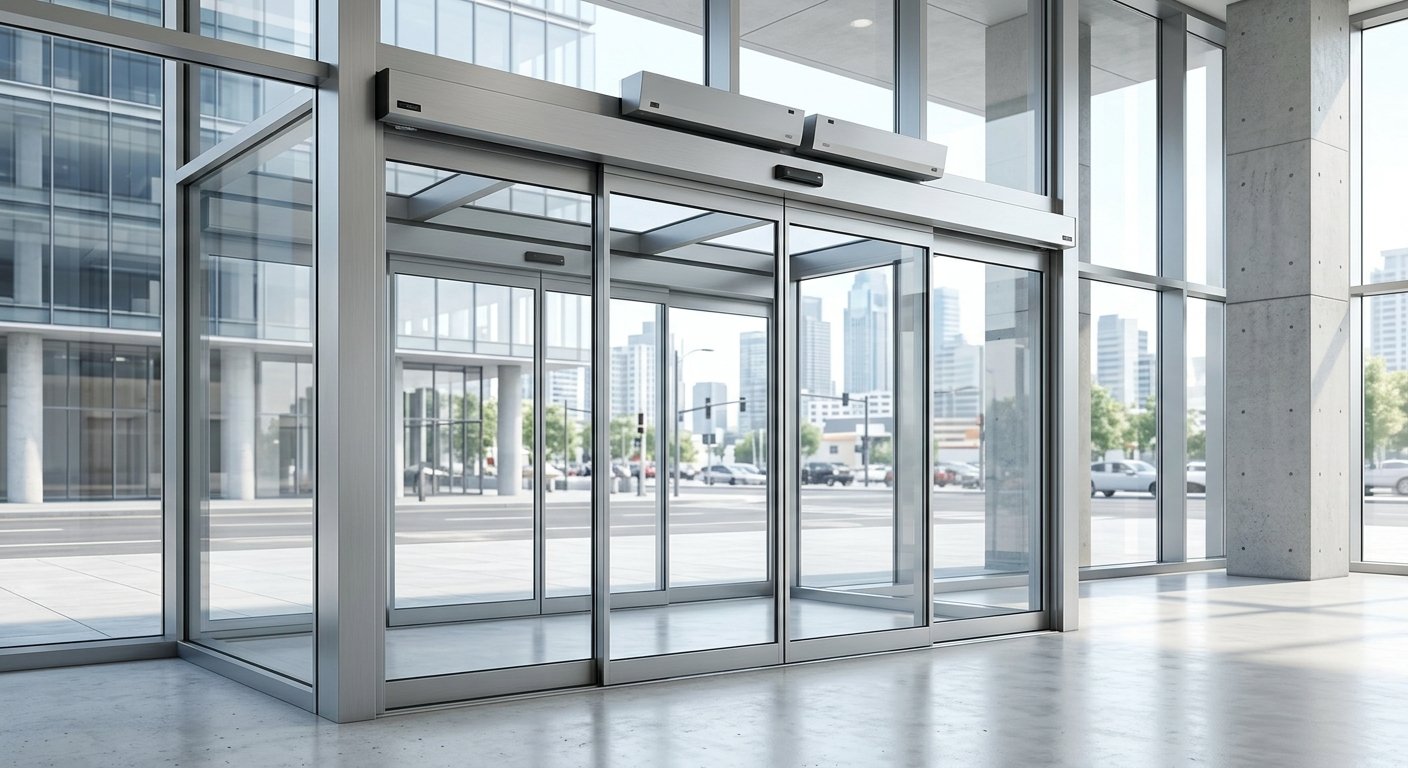
- The automatic door operator, track, door panels, and aluminum framing.
- Activation sensors plus separate presence and safety sensors for detection.
- A breakout system, locking system, battery backup, access-control interface, key switch, and emergency opening system.
Automatic Sliding Door Installation: Where Projects Go Wrong
Installation day exposes every shortcut taken earlier. Uncoordinated trades are the top cause of on-site delays. If the electrician, glazier, and installer show up on different days, expect installation variations nobody approved.
Unsafe detection zones happen when sensors get set for speed, not safety. This can cause accessibility failure for slow walkers, and egress failure during an emergency exit. A recent emergency medicine study found close to 39,000 hospital visits linked to automatic doors over ten years, with older adults three times more likely to suffer severe injury.
Automatic Door Maintenance Requirements Commercial Buyers Often Skip
Buyers focus on the purchase and forget the years after. Automatic door maintenance requirements aren’t optional extras. Skipping them causes downtime right when your building needs the door most.
| Risk | What It Looks Like | What to Ask Your Supplier |
| Long component lead times | Broken part, no stock for weeks | Where are spare parts stored, and how fast? |
| Unavailable spare parts | Discontinued model, no fix possible | Is this model still in active production? |
| Warranty exclusions | Claim rejected over fine print | What voids the warranty, in plain words? |
| Expensive service contracts | Locked into one costly provider | Can I use another technician later? |
An Honest Warning Before You Choose
I won’t pretend every job goes perfectly, even with the right supplier. Weather delays happen. Building sites change plans mid-project. Good operators still need part replacements sooner in high-traffic entrances like hospitals or shopping centres. No supplier can promise zero downtime, ever.
If someone tells you that, be cautious. What separates a good automatic door supplier from a bad one isn’t perfection. It’s how fast they respond when something goes wrong, and whether they told you the truth upfront.
Conclusion
The real benefit of this checklist isn’t just avoiding delays. It’s knowing what you’re buying, who’s responsible for each part, and what happens after installation day. That knowledge protects your budget and your building’s safety record for years, not just opening week.
Start by asking any automatic door supplier for their compliance statement and test documentation before you request a quote. Then confirm which trades they coordinate directly, instead of leaving that to you. Finally, ask what maintenance schedule comes standard, and what extending it costs.
Buyers who ask these three questions early avoid most delays and hidden costs described above. For automatic sliding doors Australia-wide, that groundwork matters more than the brand name on the operator.
Frequently Asked Questions
1. How long does it take to install an automatic sliding door?
Most commercial units take one to three days once parts are on site. Add time if electrical or access-control wiring wasn’t planned.
2. Why do automatic doors close so fast on people?
Usually a sensor is dirty, blocked, or wrongly calibrated. Presence and safety sensors need regular cleaning and testing.
3. Do automatic doors work during a power outage?
Most units include battery backup so they open or stay unlocked briefly. Confirm backup runtime with your supplier before relying on it.
4. What standard do automatic doors need to meet in Australia?
Commercial automatic doors must comply with AS 5007 and the National Construction Code. Ask for a written compliance statement, not a verbal claim.
5. Can you get spare parts for automatic doors easily?
It depends on the manufacturer and model. Confirm parts availability and lead times before you buy, not after something breaks.